
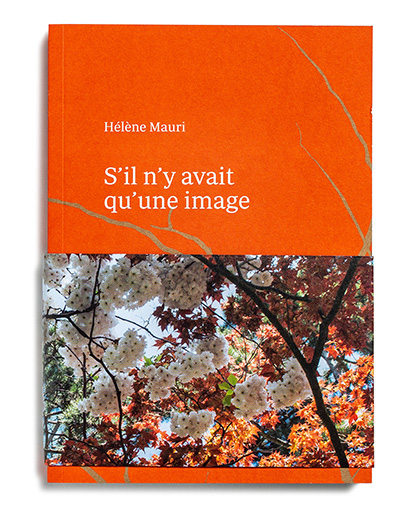
L’idée de réaliser S’il n’y avait qu’une image débuta au cours de mes études à l’Ecole nationale supérieure Louis Lumière, période de jonction entre ma carrière d’infirmière et ma future activité de photographe.
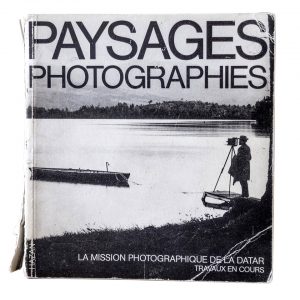
La Mission photographique de la DATAR
Lors de la préparation du concours de cette école, je m’intéresse particulièrement à la Mission Photographique de la DATAR qui finalement sera le point de départ de mes autres projets.
Dans les années 1980, la DATAR (Délégation Interministérielle du Territoire et de l’Attractivité Régionale) envoie plusieurs photographes dresser un portrait de la France par la photographie. Chacun d’entre eux est missionné pour réaliser un travail photographique dans une partie de la France. Des photographes connus comme Doisneau, Depardon, Koudelka y participe, d’autres moins, avec des rendus photographiques variés, en noir et blanc et en couleur mais avec une unité d’ensemble cohérente qui me passionne.
Cette commande photographique publique d’envergure me marqua tant par les photographies que par sa méthode. Intérêt d’autant plus marqué que je réalise majoritairement des photographies de paysages depuis mes débuts photographiques. En la découvrant, je cultive le rêve de prendre part à une initiative similaire.
Une réflexion sur la commande photographique
Séduite par cette initiative photographique, je fais de la commande photographique mon thème de mémoire de recherche de master 2. Au cours de ce mémoire, je m’intéresse tant aux missions photographiques qu’à la notion de commande et au rôle du commanditaire.
Puisque participer à une mission photographique nationale d’envergure était peu probable, je décidais donc un fil conducteur différent : faire en sorte de créer et de me positionner dans des situations de commande à travers mes futurs projets et qu’une personne « inattendue » me passe commande d’une photographie. Inattendue dans le sens où cette personne ne serait pas liée au domaine artistique ou photographique. Ainsi quiconque pourrait devenir commanditaire d’une image.
Une fenêtre photographique
Lors de ces années d’études photographiques, je poursuis mon activité d’infirmière en étant qu’intérimaire. Pendant trois ans, j’ai l’occasion de travailler dans plusieurs hôpitaux situés en Ile-de-France pour des missions courtes. De passage dans les services, je m’interroge sur l’espace de la chambre d’hôpital : un espace clos, fermé avec peu d’ouverture sur le monde extérieur et dépersonnalisé avec un mobilier identique dans chaque chambre. L’attribution des chambres aux patients est réalisée de manière aléatoire. Les murs sont le plus souvent vides, mais la photographie y prend une place de plus en plus importante notamment lors d’hospitalisation longues. On peut alors voir des photographies ramenées par les proches de patients : portraits des enfants, de la famille, dessins des petits-enfants ou encore animaux de compagnie.
Afin de répondre à cette réflexion sur la chambre d’hôpital, l’idée du projet S’il n’y avait qu’une image est de me placer en tant que « médiateur » entre l’intérieur de la chambre et le monde extérieur dont le patient n’a pas ou plus accès. La réalisation d’une photographie puis d’un tirage, tente d’apporter dans cet espace un repère au patient, une fenêtre sur le monde. Il ne s’agit pas de choisir une photo préexistante mais bien de réaliser une réelle démarche photographique pour chaque patient.
Il ne vous reste qu'une photographie à prendre
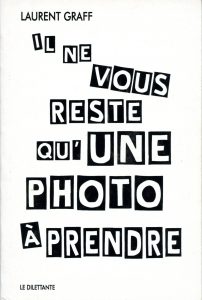
Je découvre en parallèle le livre de Laurent Graff intitulé Il ne vous reste qu’une photographie à prendre. Au-delà de l’histoire racontée dans ce roman, c’est surtout son titre qui m’interpelle : si je n’avais plus qu’une photographie à prendre, laquelle serait-elle ? Une question à laquelle je ne trouvais pas de réponse mais qui m’a questionnée sur l’idée d’une seule image à choisir.
« …Ce cliché ultime restant à prendre était tout autre, avait une valeur très différente. L’enjeu était à la fois personnel, intime, et universel, incluant l’histoire particulière du photographe et le monde dans sa globalité; d’un intérêt intemporel, présent, passé, futur, comme une image unique destinée à nous représenter aux yeux d’une civilisation extraterrestre. La photo, avec toute sa charge de solennité imposée, sera hautement symbolique, humainement déterminante. Elle devra être douée d’originalité, marier l’évidence et la surprise. Elle pourra être anecdotique avec la force édifiante d’une fable; panoramique avec l’intensité sourcilleuse d’une nature morte. Elle sera une tentative de synthèse, une démonstration, une célébration, un hymne. Depuis toujours, l’homme a ambitionné d’écrire Le Livre, de peindre Le Tableau, de composer La Musique, de réaliser Le Film; ce sera La Photo. Moi, Alain Neigel, simple photographe amateur, j’en donnerai ma vision, apporterai mon humble contribution à son édification. J’allais devoir faire un choix, éliminer ce qui ne me paraîtrait pas essentiel, ou pas assez, avec l’envie, l’espoir, l’exigence, de trouver mieux, jusqu’à ce que je décide que ceci, qui était devant moi, que je voyais, serait ma photo… »
Cette question en entraîna deux autres : si je n’avais plus qu’une image à réaliser, quel serait mon choix ? Une question dont je n’ai pas trouvé de réponse. Et pourtant, il y en aura bien une un jour et j’espère que quelqu’un pourra témoigner de cette « dernière image ». La deuxième question qui m’est venue impliquait quelqu’un d’autre : et si je n’avais plus qu’une image à réaliser pour quelqu’un ? Cette interrogation qui m’a marquée à ce moment là, me permis ensuite de mûrir les premières idées du projet S’il n’y avait qu’une image, qui à l’époque n’avait pas encore de nom.
Les débuts du projet
En 2013, je pense lors de ma dernière année d’étude à Louis Lumière à un projet qui répondrait à cette question tout en mêlant le domaine hospitalier et la notion de commande photographique. J’imagine un projet dans lequel je réaliserais les dernières volontés photographiques des patients mais j’ai la conviction que ce projet doit se faire hors de l’école. Plus tard, après avoir débuté le projet, j’étends ma réflexion ouvrant à un public plus large, en proposant la réalisation d’une image pour un patient qui en éprouverait le besoin et l’envie quel que soit l’avancement de sa maladie.
Le croisement entre le soin et la photographie
Ainsi ce projet dont j’ai eu l’idée résulte de deux démarches. La première proche de mon activité de soignante avec l‘objectif de réaliser quelque chose d’à la fois utile pour le patient et de désintéressé. La deuxième est photographique, où la réalisation de la photographie choisie par le patient est une sorte de « commande photographique ». Parfois, un défi photographique à relever dans lequel le patient est prescripteur, demandeur, « commanditaire » de l’image. Après que cette personne ait demandé cette image, l’enjeu est de la photographier afin de reproduire au plus proche l’image attendue.